
Music Production Schools: A Guide to Training for a Career as a Professional Producer
- Education
- By Kirstie H. on
The Case for Formal Training
Plenty of accomplished producers learned on their own, yet a music production school brings real advantages. Students get structured instruction, professional-grade gear, and contacts within the industry. Beginners stand to gain the most, since a good program teaches core knowledge that could otherwise take years to piece together alone.
Professional Gear and Studios
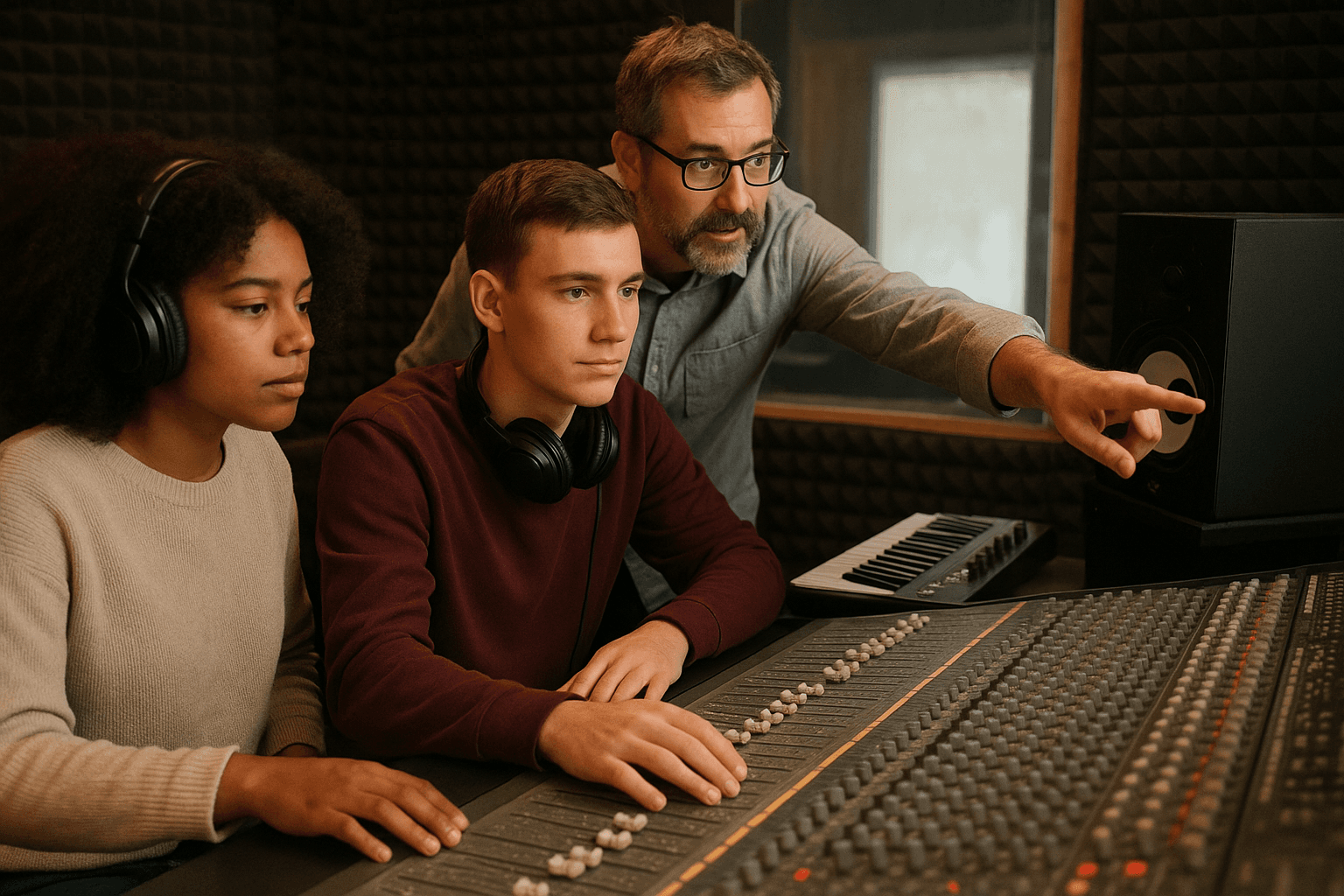
Among the biggest draws is the chance to work with industry-standard equipment. Schools generally offer modern recording studios, mixing consoles, microphones, and software including Pro Tools, Ableton Live, and Logic Pro. Hands-on time with these tools lets students practice in conditions that resemble real production environments.
Teachers With Industry Experience
Instructors are typically seasoned professionals with deep backgrounds in sound engineering, mixing, and mastering. Learning straight from working producers can speed up progress and surface insights that online tutorials tend to miss. Personalized feedback on individual projects is another valuable benefit that helps students improve.
A Clear Learning Path
Self-taught producers often struggle to know what to tackle next. Schools solve that with organized courses spanning audio engineering, sound design, and music theory, plus business topics such as music licensing and contracts. This broad coverage means graduates finish with a thorough grounding in music production.
Program Options
Music production education comes at several levels, from brief certificates to full bachelor's degrees. Each has its own emphasis and suits a different level of experience.
Certificates
Certificate programs are short courses meant for beginners or for professionals who want to upgrade particular skills. They usually run from a few weeks to a few months and concentrate on one area, such as mixing, mastering, or sound design. They suit people who want to start quickly or build on what they already know without taking on a full degree.
Associate Degrees
An associate degree in music production generally takes two years. The curriculum is well rounded, covering topics from music theory to recording techniques. It is a strong choice for students who want a comprehensive education but are not yet ready for a bachelor's degree.
Bachelor's Degrees
For anyone serious about a music production career, the bachelor's degree is the most thorough route. These programs usually last four years and include in-depth coursework in sound engineering, music production, and the music business. Graduates often hold the credentials needed for more advanced roles, such as audio engineer or producer for major labels.
Jobs and Pay After Graduation
Once a course is finished, the next challenge is getting into the industry. Formal training opens doors to many roles, from producing for independent artists to working in film and video games. Several career paths are worth considering.
Freelance Producer
Freelance producers work with independent artists, making tracks and mixing and mastering songs for a range of projects. Work is usually paid per project, so freelancers have the flexibility to pick the jobs they want. Earnings can reach up to $55 an hour depending on experience, and a strong portfolio raises the potential for higher pay.
Sound Engineer for Media
Sound engineers record and shape audio for film, television, or video games. The field is growing, particularly with the spread of streaming services and digital content. Engineers here typically work on contract or full time, and pay is often attractive depending on expertise.
Music Business and A&R
Many schools also teach the business side of music, preparing graduates for artist and repertoire (A&R), music publishing, or music licensing roles. These jobs demand a deep understanding of how the industry operates and can lead to high-paying positions at record labels and production companies.
Bottom Line
A music production school offers access to professional equipment, mentorship from industry veterans, and structured learning that builds a solid foundation. Whether the goal is to launch a music career or to strengthen existing skills, formal training can be an excellent stepping stone into the industry. With so many programs available, beginners and aspiring professionals alike can find a course that fits their needs.