
What Makes a Thong Comfortable: Fabrics and Fit Explained
- Lifestyle
- By Kirstie H. on
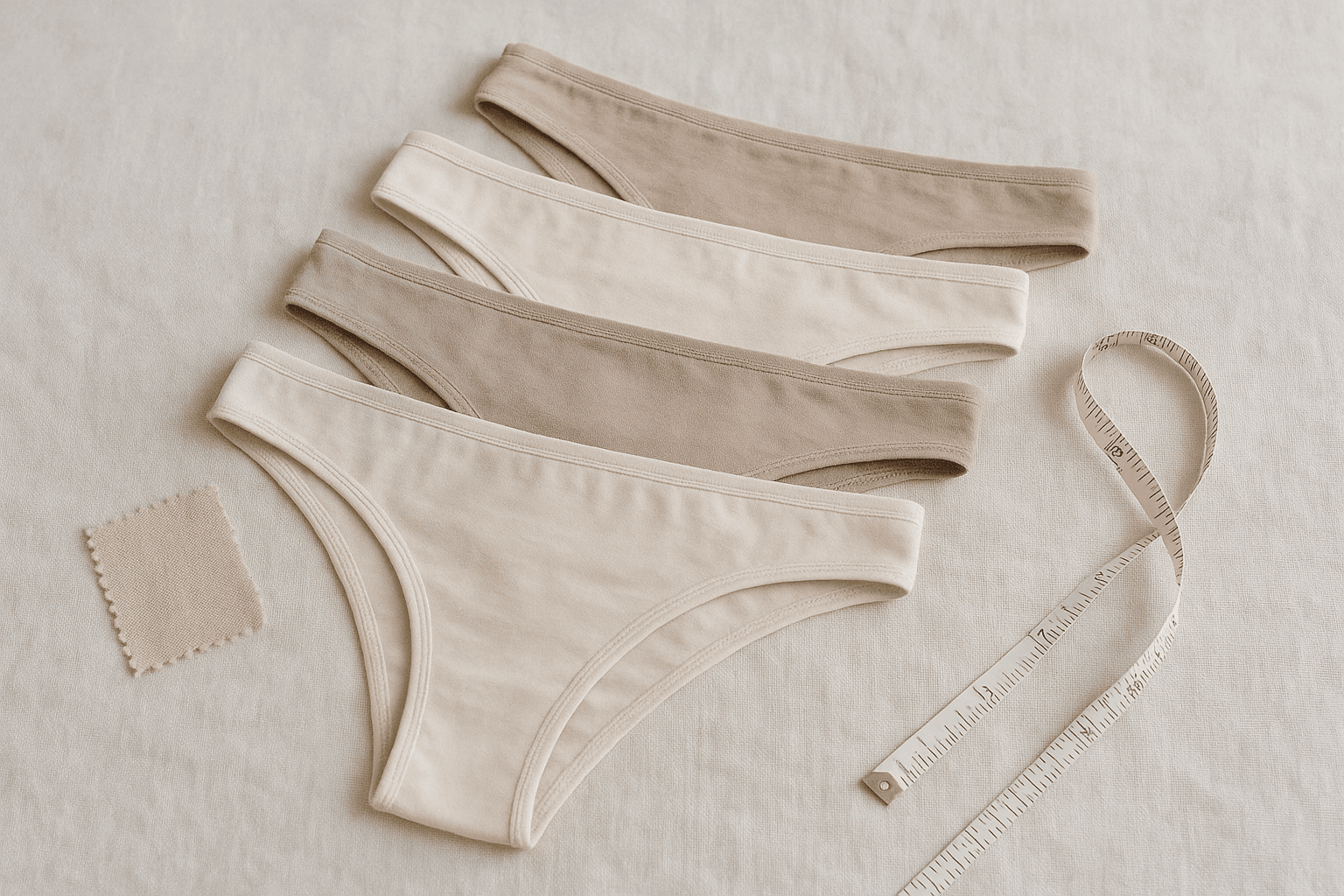
A comfortable thong comes down to three things: fabric that breathes and stretches, a cut that matches the wearer's body, and seams and edges that stay in place without digging. When one of those is off, the garment tends to shift, pinch, or irritate.
Most complaints about thongs trace back to a mismatch rather than the style itself. A wrong size, stiff lace, or a waistband that rolls can turn a wearable pair into one that stays in the drawer.
This guide covers which fabrics tend to work best, which fit details matter most, and how to test a pair before buying a multipack.
Fabrics That Tend to Feel Best
Fabric is the biggest factor in day-long comfort. The body of the thong sits against sensitive skin for hours, so softness, moisture handling, and stretch all count.
- Cotton and cotton blends: Soft, breathable, and widely available. Cotton with a small amount of spandex or elastane typically adds stretch and helps the shape hold up after washing.
- Modal and micromodal: Plant-derived fibers that usually feel smooth and lightweight. Many wearers find them softer than standard cotton, though they can cost more.
- Bamboo-derived viscose: Often marketed as silky and breathable. Quality varies by brand, so the fabric blend and construction matter more than the label alone.
- Nylon-spandex microfiber: Smooth and quick-drying, which is why it is common in seamless styles. It tends to be less breathable than natural fibers, so it suits some wearers more than others.
The Gusset Matters More Than It Looks
The gusset is the panel that covers the crotch area, and it is the part that touches the most sensitive skin. A cotton or other breathable lining there is a common recommendation, even when the rest of the garment is made from synthetic fabric.
Medical sources, including the American College of Obstetricians and Gynecologists, generally suggest breathable underwear and avoiding prolonged time in damp clothing to help reduce irritation. Changing out of sweaty or wet clothes promptly is a simple habit that helps.
Fit Details That Affect Comfort
A thong that fits well should stay put without leaving deep marks or requiring constant adjustment. These features tend to make the biggest difference.
- Waistband width and finish: Wider, soft bands usually distribute pressure better than thin elastic. Bonded or laser-cut edges can reduce visible lines, while stiff or scratchy trim can irritate.
- Rise: Low-rise styles sit near the hips, mid-rise sits near the navel, and high-rise covers more of the waist. A mid or high rise often feels more secure for people whose low-rise pairs slide or roll.
- Back panel shape: A wider back strip or a T-back versus a V-back can change how a pair sits. Wider backs tend to feel steadier, while narrow strings feel more minimal but may shift more.
- Leg openings: Edges that are too tight can dig in, and edges that are too loose can gape. Soft, flat elastic usually is the most forgiving.
Seams, Lace, and Tags
Seams that run across the body of the garment can rub, especially under fitted clothes or during exercise. Flat-stitched, bonded, or seamless construction generally reduces this.
Lace is a common trouble spot. Soft, stretchy lace can feel fine, but rigid or scalloped edges may chafe on the hips. Printed tags or heat-transfer labels are a lower-friction alternative to sewn-in tags.
Getting the Size Right
Sizing varies between brands, so the size printed on a previous pair is only a starting point. Checking each brand's size chart, usually based on hip measurements, is more reliable than guessing.
- Measure the fullest part of the hips and compare it with the chart.
- If between sizes, consider the stretch of the fabric. Low-stretch fabrics often call for sizing up, while very stretchy microfiber may run true or slightly large.
- Buy a single pair or a small pack first. Wearing it for a full day, including sitting, walking, and exercising, reveals most fit issues.
- Check the return policy, since many retailers do not accept returns on opened underwear.
Care Habits That Keep Comfort Lasting
Elastic and fabric wear down over time, and a pair that once fit well can start to roll or sag. Washing according to the care label, avoiding high heat in the dryer, and skipping fabric softener on stretchy fibers can help the elastic last longer.
It is also worth replacing pairs that lose their shape, pill, or feel rough. Persistent itching, discharge, or discomfort is a reason to talk with a health care provider rather than assume the underwear is the cause, since conditions such as yeast infections and bacterial vaginosis have many triggers.
The Bottom Line
The most comfortable thong is usually the one that pairs a soft, stretchy, breathable fabric with a waistband and back panel that suit the wearer's body. Paying attention to the gusset, seams, and sizing chart makes it easier to find a pair that disappears under clothes. Trying one pair before stocking up remains the simplest way to avoid wasted money.